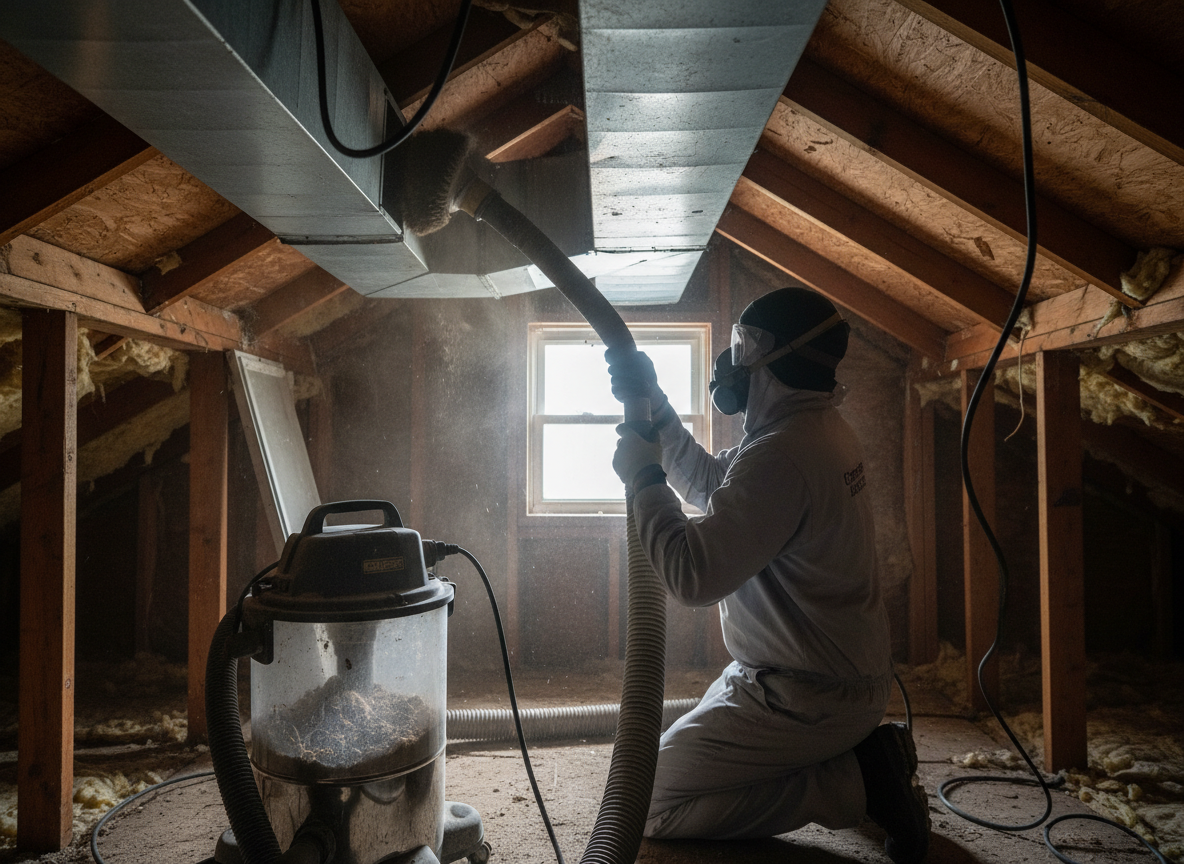
Centerville homes, particularly those along streets near Wilmington Pike and in surrounding neighborhoods, often feature duct systems installed decades ago that accumulate fine dust, insulation fibers, and seasonal debris from the region's heating cycles. When temperatures drop, furnaces run longer and push settled material through registers, reducing airflow and affecting indoor air in rooms farthest from the unit. Proper cleaning requires accessing main trunks and branches without disturbing the settled structure of older sheet-metal or flex duct runs common here.
Technicians use negative-air machines connected at the furnace to pull contaminants outward while agitating each run with brushes sized for the duct diameter. In Centerville properties, low crawl spaces or finished basements frequently limit equipment placement, so crews must stage hoses through exterior doors or garage entries to maintain containment. Skipping this step risks redistributing loosened particles into living areas rather than capturing them at the source.
Homeowners sometimes attempt partial cleaning with consumer attachments that only reach the first few feet of each branch. This leaves the majority of the trunk lines untouched and can create new blockages where dislodged material settles. Full-system service includes removing and cleaning the blower compartment and inspecting the plenum for gaps that allow unfiltered air to bypass the filter, a common issue in homes where filters have been changed infrequently during peak heating months.
Technician insight
In Centerville, the thing that catches most people out with HVAC duct cleaning is the way older homes along Wilmington Pike have settled on the local terrain. Main trunks often sit at slight angles that trap debris in low spots, so a quick vacuum from the registers alone leaves the heaviest accumulation untouched and can push it farther into the system.
Reduced Airflow in South Centerville Residence
A homeowner reported weak airflow from several registers after the first cold snap. Inspection showed heavy dust and pet hair concentrated in the main trunk where it dipped slightly due to floor settling. The crew set up containment at the furnace, agitated each branch, and extracted the material without disturbing finished ceilings. Airflow returned to normal once the system was reassembled and tested.
How it works
- 1
Initial System Inspection
Technicians examine accessible ducts, registers, and the furnace compartment to identify access points and note any damaged sections before equipment is set up.
- 2
Containment and Equipment Setup
Negative-air machines are positioned to pull debris outward while protecting finished surfaces in Centerville homes with limited basement or crawl-space access.
- 3
Agitation and Extraction
Each duct run is agitated with appropriate tools while the vacuum removes loosened material, ensuring the entire trunk and branch network is addressed.
- 4
Final Verification
Registers and the blower housing are checked for remaining debris, and airflow is tested at multiple points to confirm the system is clear before departure.
Pricing
Upfront quotes provided after inspection; final cost depends on number of runs, access conditions, and whether the furnace or blower also requires attention.