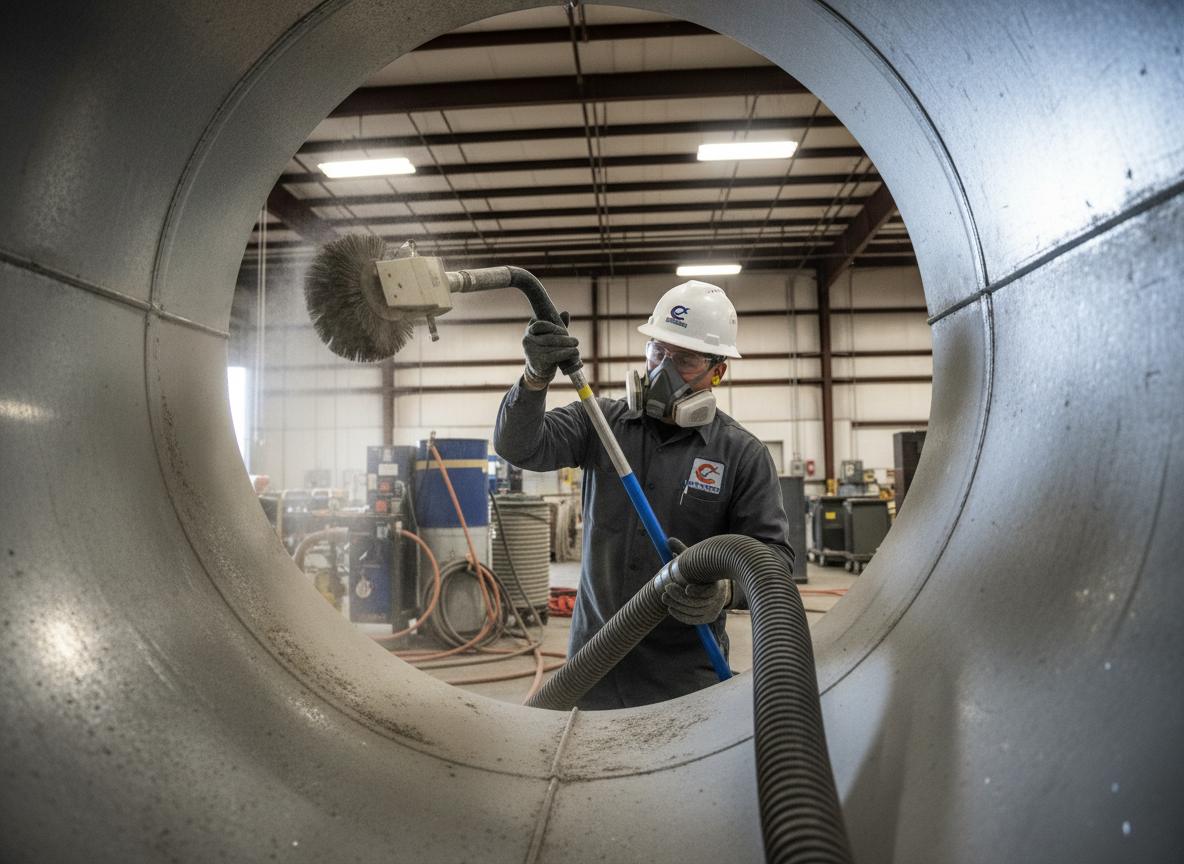
Commercial properties in Centerville often feature mixed-age duct systems installed across decades of retail and office development along routes like Wilmington Pike. These setups accumulate heavier particulate loads from foot traffic, HVAC cycling, and nearby construction dust common in Montgomery County. Standard residential tools fall short here because commercial runs include longer horizontal spans, multiple branch points, and access limited by drop ceilings or rooftop units. Proper cleaning requires mapping the full network first to avoid pushing debris into occupied spaces during business hours.
Seasonal swings in the Centerville area drive different cleaning priorities. Spring pollen loads and fall leaf debris enter through intake vents on flat-roof buildings, while winter heating cycles dry out and loosen accumulated lint. Technicians must account for these patterns when scheduling so that filters and coils stay clear without interrupting tenant operations. Edge cases include restaurants near the Dayton Mall corridor where grease vapor mixes with dust, creating sticky residues that demand degreasers and extended vacuum times.
Access challenges appear frequently in Centerville commercial stock because many buildings from the 1970s and 1980s have ductwork routed through tight mechanical rooms or above suspended ceilings with minimal service doors. Forcing entry risks damaging fire dampers or insulation. Experienced crews use remote cameras and flexible whips sized for the duct diameter rather than generic brushes. Post-clean verification includes checking static pressure at multiple points to confirm airflow returned to design levels without guessing.
Local code expectations in the Centerville area emphasize maintaining documented airflow for tenant safety reports. Skipping sections of the system or using underpowered equipment leaves hidden buildup that later triggers complaints about uneven temperatures or odors. Crews document every accessible run and note any damaged sections so property managers can plan repairs before the next inspection cycle.
Technician insight
In Centerville, the thing that catches most people out with Commercial Air Duct Cleaning is the mix of 1970s ductwork and later retrofits around the Wilmington Pike corridor, where mismatched diameters and hidden fire dampers turn a standard job into one that needs extra time and smaller tools to avoid damaging insulation or tripping alarms.
Retail Plaza Near Wilmington Pike
A Centerville retail plaza reported uneven airflow and musty odors in several tenant spaces. Inspection showed compacted dust and construction debris in the older main trunk lines feeding the stores. Crews isolated the system, cleaned the full accessible network with commercial rotary equipment, and restored balanced airflow without interrupting daytime operations.
How it works
- 1
Site Assessment
Map all accessible commercial duct runs, note access points, and identify any fire dampers or insulation concerns specific to the building age.
- 2
Containment Setup
Isolate work zones with negative air machines to prevent dust migration into occupied tenant spaces during normal business hours.
- 3
Mechanical Cleaning
Use rotary brushes and HEPA vacuum equipment sized for commercial duct dimensions, followed by coil and register cleaning.
- 4
Verification and Documentation
Perform post-clean airflow checks at multiple points and provide a written summary of sections serviced and any noted issues.
Pricing
Pricing varies with building size, number of stories, and duct access difficulty.