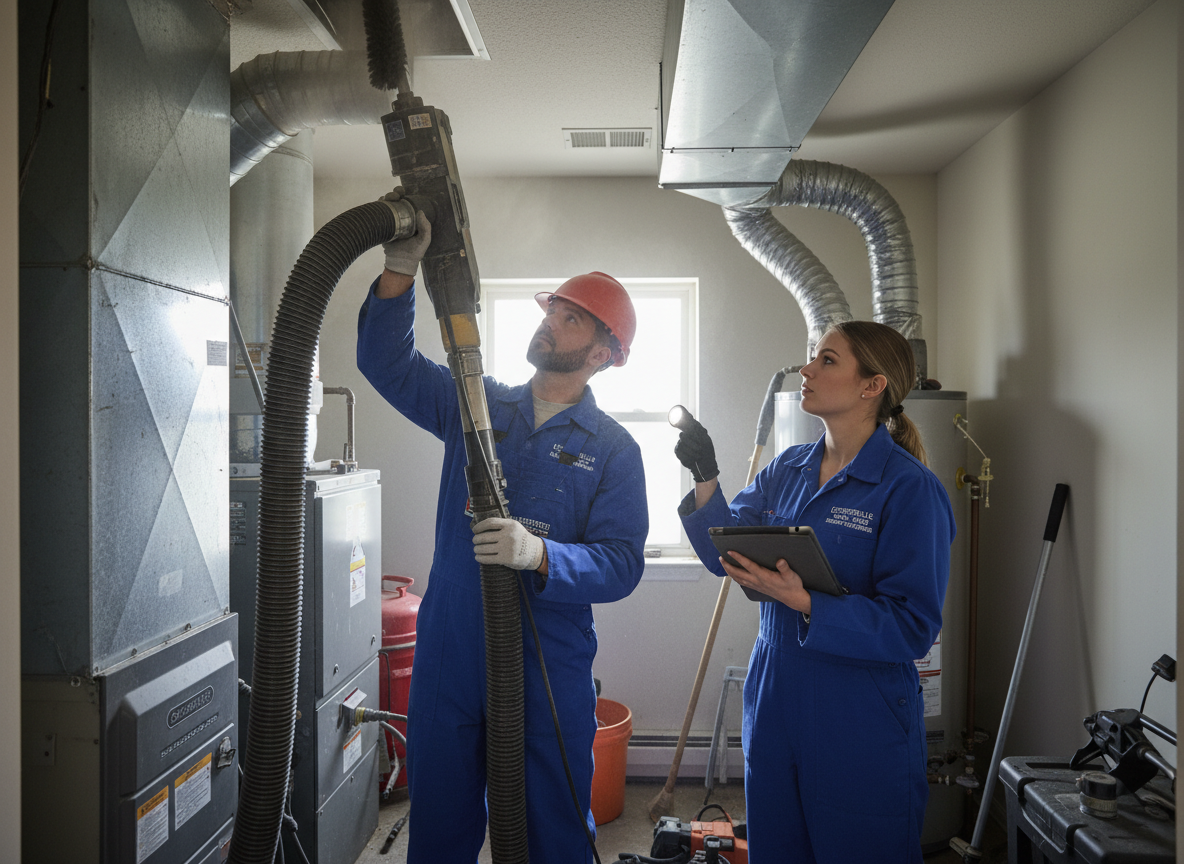
Licensed and insured air duct cleaning protects Centerville homes by containing debris during removal instead of redistributing it through supply lines. Older split-level and ranch houses common along Wilmington Pike often feature trunk lines routed through tight crawlspaces or attic knees, requiring negative-pressure equipment and sealed access points to avoid pulling particles into living areas. Without proper containment, fine dust from decades of accumulation can settle on furniture and HVAC components, shortening equipment life in the variable Midwest climate.
Centerville properties built in the 1960s through 1980s frequently have flexible duct sections that sag or disconnect at joints, creating hidden pockets where lint and pet dander collect. A licensed crew inspects every accessible run with cameras before cleaning, identifying collapsed sections that standard vacuum methods miss. Insurance coverage ensures any incidental damage during entry through finished ceilings or basement returns is addressed without homeowner liability.
Proper licensing also means adherence to local venting and access requirements when working near gas appliances common in Centerville garages and utility rooms. Technicians seal registers and use HEPA-filtered collection to keep airborne particles from migrating into adjacent rooms during the process. This approach prevents the post-clean odor complaints that arise when crews skip containment steps in multi-story homes.
Technician insight
In Centerville, the thing that catches most people out with licensed and insured duct cleaners is the narrow knee-wall access in 1970s split-levels near Wilmington Pike, where skipping full containment lets loosened debris migrate into finished rooms instead of staying in the vacuum.
Restricted Access in a Centerville Split-Level
Homeowners reported weak airflow on the upper level. Inspection showed a collapsed flexible run behind a knee wall. We established negative pressure, cleared the line without opening finished surfaces, and restored balanced flow to all registers.
How it works
- 1
Initial Assessment
Technicians arrive at the Centerville address and review all accessible duct runs from the furnace outward.
- 2
Containment Setup
Registers are sealed and negative pressure is established to direct debris into the collection unit.
- 3
Mechanical Cleaning
Rotary brushes and compressed air dislodge buildup while the vacuum system captures material at the source.
- 4
Final Verification
Each section is re-inspected and airflow is tested at multiple vents before equipment is removed.
Pricing
Cost depends on the number of runs, access difficulty in crawlspaces or attics, and whether flexible duct sections require extra handling.