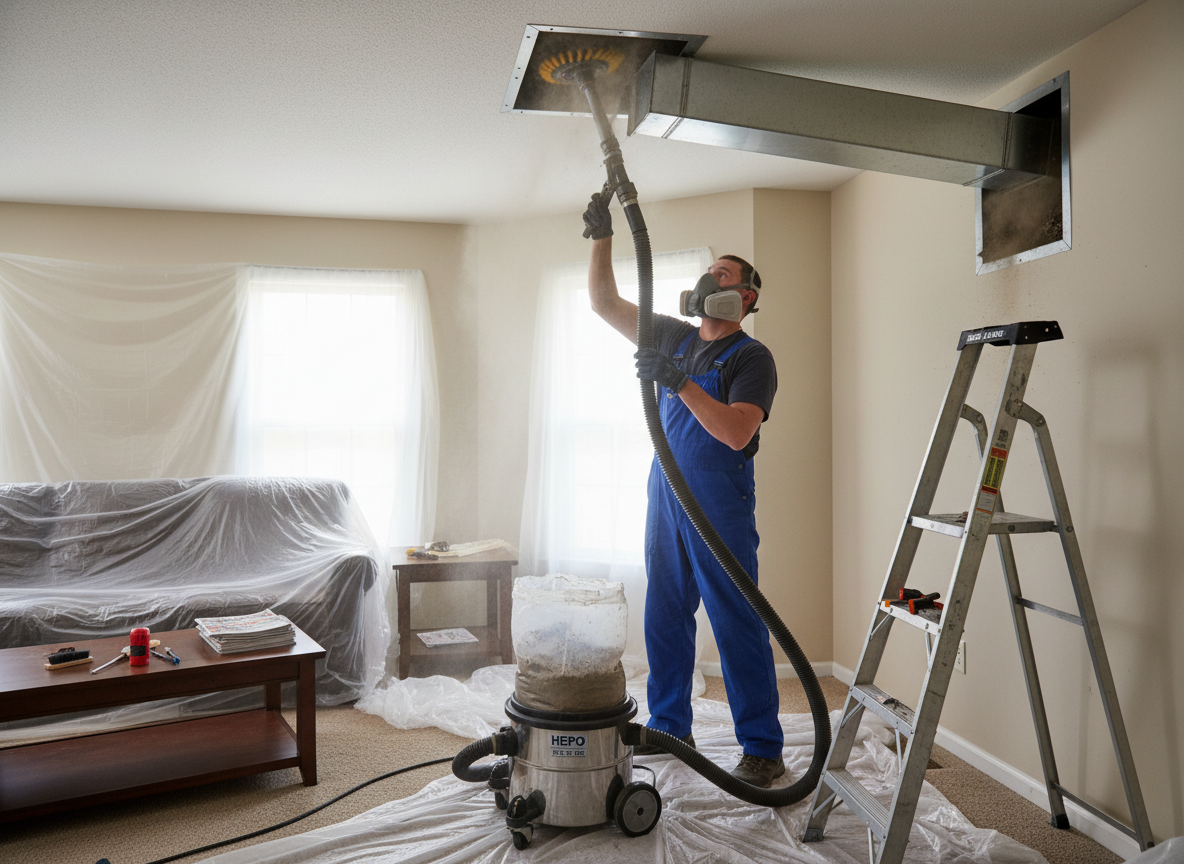
Centerville homes along Wilmington Pike and in neighborhoods like Yankee Trace often feature duct systems installed decades ago that trap pollen, pet dander, and construction dust from nearby renovations. Air vent cleaning here requires careful disassembly of register boots and branch lines to avoid damaging aged flex duct or disturbing insulation in crawl spaces common on the area's rolling terrain. Skipping these steps leaves residue that recirculates during humid summers when HVAC runs constantly.
Winter heating cycles in the Centerville area push fine particles through vents in split-level and ranch-style houses built before 1990. Proper cleaning involves negative-air machines positioned at the main trunk to capture debris without spreading it into living spaces. Homeowners frequently overlook how tree pollen from surrounding green spaces settles into exterior vents during spring, creating blockages that reduce airflow and strain furnaces.
Edge cases include multi-story homes near I-675 where second-floor vents collect more lint from laundry rooms above. Technicians must map each branch run before vacuuming to prevent collapse of older metal ducts weakened by moisture from the region's freeze-thaw cycles. This level of detail prevents callbacks and ensures vents stay clear through peak allergy months.
Technician insight
In Centerville, the thing that catches most people out with air vent cleaning is how many 1970s-80s homes on streets off Wilmington Pike have flex duct runs that sag and trap debris near floor registers. Homeowners try DIY brushes and just push the mess deeper into the trunk line, making our first visit twice as long.
Blocked Vents in Yankee Trace Home
A Centerville split-level had reduced airflow on the upper level after years of spring pollen buildup. Inspection showed collapsed flex sections near exterior walls. We isolated the branches, vacuumed each run, and straightened the ducts without replacement. Airflow returned to normal and the homeowner reported fewer allergy symptoms the following week.
How it works
- 1
Initial Assessment
Inspect all accessible vents and map the duct layout specific to the Centerville home's construction era.
- 2
Equipment Setup
Position negative-air machines and seal registers to contain debris during cleaning.
- 3
Vent and Branch Cleaning
Remove buildup from registers, boots, and branch lines using brushes and vacuum tools.
- 4
Final Verification
Reassemble components and confirm improved airflow before leaving the property.
Pricing
Cost depends on number of vents, home age, and duct accessibility. Upfront quotes provided after inspection.