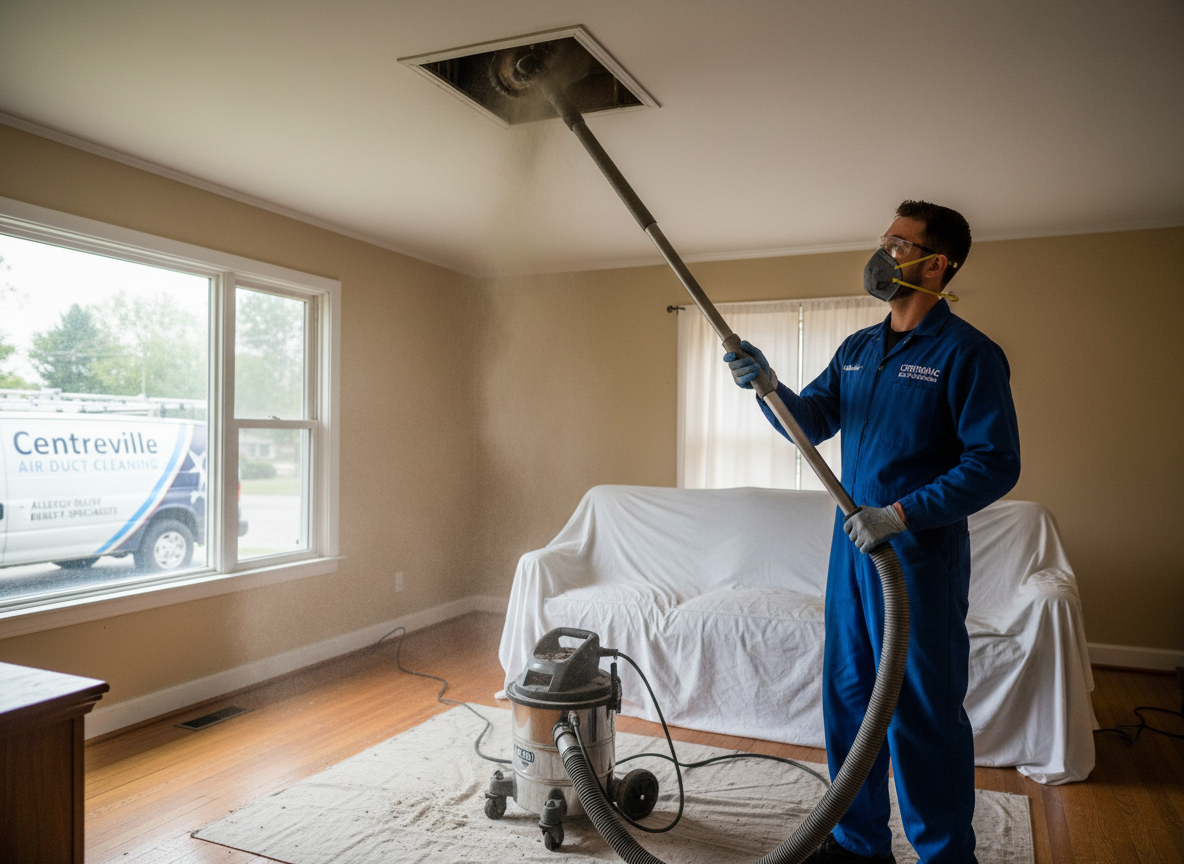
Centerville homes built from the 1960s onward often have original sheet-metal ducts that trap pollen entering through attic intakes during spring and fall. When homeowners notice increased sneezing or sinus issues after opening windows, the buildup inside supply runs near the second floor is frequently the source. Cleaning focuses on reaching branch lines that standard vacuuming misses, especially in split-level layouts common along Wilmington Pike.
Moisture from humid Ohio summers can cause dust to cake along return ducts in basements, creating a persistent allergen reservoir that recirculates with every heating cycle. Technicians use agitation tools sized for 6-inch and 8-inch lines to break deposits without damaging the original seams. Access panels added during the job allow future inspections without cutting into finished ceilings.
Homes near the creek corridors in Centerville experience higher outdoor mold counts that infiltrate through crawl-space returns. Sealing those entry points after cleaning prevents rapid recontamination during wet periods. The process also includes brushing the furnace blower housing where fine particles settle and get blown back into living spaces.
Residents in neighborhoods with mature trees see heavier leaf debris and pollen loads entering through roof vents each autumn. A full cleaning addresses both the main trunk and the individual room runs, restoring airflow that had been restricted by years of accumulated material.
Technician insight
In Centerville, the thing that catches most people out with air duct cleaning for allergies is the original 1960s-70s ductwork along Wilmington Pike that was never sealed at the joints, so pollen from the surrounding fields keeps getting pulled back in even after one cleaning.
Persistent Spring Allergies in a Split-Level Home
A Centerville homeowner on the east side reported worsening symptoms each April despite new filters. Inspection showed heavy pollen accumulation in the upstairs supply runs that fed directly from an attic intake. We agitated and extracted the material through the main trunk, then sealed the accessible joints. Airflow improved and the family noticed fewer symptoms during the next pollen season.
How it works
- 1
Initial System Inspection
Technician maps all accessible ducts and returns in the Centerville home, noting construction type and any visible allergen buildup.
- 2
Negative Pressure Setup
Equipment creates containment at the main trunk while agitation tools loosen material inside branch lines without spreading dust into living areas.
- 3
Source Removal and Brushing
Specialized brushes sized for local duct diameters dislodge pollen and dust, which is then pulled into the vacuum system.
- 4
Final Verification
Each register is checked for restored airflow and the system is run to confirm no residual particles remain in the supply path.
Pricing
Cost depends on number of runs, access difficulty, and whether the home has multiple HVAC zones.